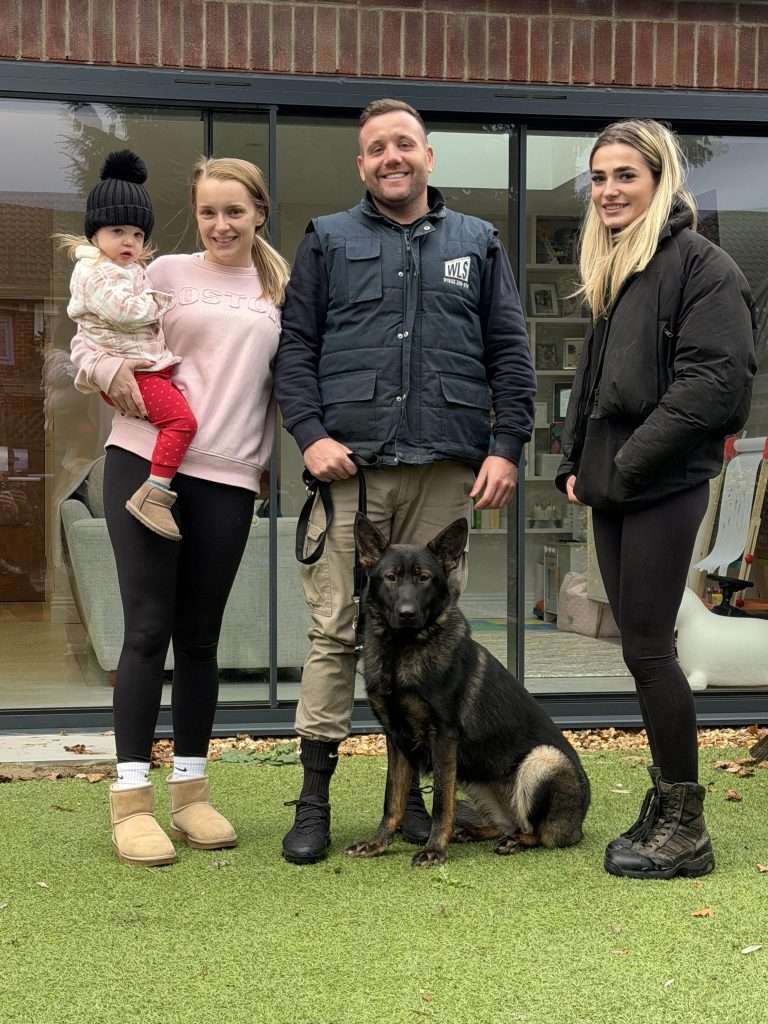
Protection dogs are becoming more popular than ever in the UK, providing individuals and their families with an extra level of security and a loving, loyal animal companion. However, these animals are much more than just pets, and as such, they require a bit more care and training. One question that is often asked is, ‘Is it important to socialise a protection dog?’ and the answer is yes, absolutely.
Socialisation is one of the most important components of developing a stable, trustworthy, and effective protection dog. At TOTALK9, we place a strong emphasis on ensuring protection dogs are confident, balanced, family-friendly and good at their job. To do this, we put a lot of focus on socialisation.
In this article, we’ll explore why socialisation matters for protection dogs, what it involves and how our team at TOTALK9 can help.
What is Socialisation and Why Does it Matter?
Socialisation is the process of exposing a puppy or adult dog to different environments, people, animals, sounds, surfaces, and everyday situations in a safe, controlled, and positive way.
For protection dogs, this exposure must be even more thorough and intentional than for a typical household pet.
The Developmental Impact
During a dog’s early weeks and months, its brain is rapidly forming associations. Positive experiences help build confidence, while negative or absent experiences can lead to fear, anxiety, or unpredictable behaviour.
A poorly socialised protection dog is more likely to:
• Overreact to non-threatening stimuli
• Misjudge situations
• Exhibit fear-based behaviour
• Become stressed in busy or unfamiliar environments
These traits are the exact opposite of what you want in a dog whose job is to protect you.
Confidence is Key for Effective Protection Work
A dog cannot perform controlled protection tasks if it is unsure of the world around it. Equally, a dog that is nervous or insecure is far more likely to act out of fear, which is dangerous. Proper training and socialisation produce dogs that:
• Understand the difference between normal environmental noise and genuine threats
• Can remain calm in crowds or chaotic situations
• Are stable around children, guests, or other animals
• Respond decisively when genuinely needed
At TOTALK9, socialisation is integrated into every stage of training because a dog that is comfortable in its environment is capable of working with clarity, focus, and precision.
Why Socialisation Won’t Reduce a Protection Dog’s Ability to Protect
A common myth, especially among people researching their first protection dog, is that socialisation might make the dog “too friendly” or less serious about its protective duties.
This is entirely false and goes against many of the established principles of protection dog training.
Protection is Not About Indiscriminate Aggression
True protection work is controlled, measured, and based on obedience, not random aggression. A properly trained protection dog should never attack without clear direction or genuine provocation.
When a dog is well-socialised, it becomes:
• More discerning and better able to recognise real threats
• More obedient because it is not in a state of stress
• More responsive because it is not overwhelmed by external stimuli
• More stable and less likely to react inappropriately
A dog that is fearful or under-socialised is far more likely to misinterpret a situation and react unpredictably, which is where things can get dangerous.
Friendly Does Not Mean Ineffective
Even the most powerful, elite-level protection dogs trained by TOTALK9 are affectionate and sociable with their families. Socialisation teaches them that:
• Familiar people are safe
• Everyday scenarios are normal
• Not every stranger is a threat
This allows them to save their protective instincts for when they are genuinely needed.
In many ways, socialisation actually enhances a dog’s protective ability by ensuring that its reactions are rooted in confidence, not fear or confusion.
How TOTALK9 Socialises Protection Dogs
Most of our training at TOTALK9 incorporates socialisation early and continues throughout the dog’s development. This ensures dogs transition seamlessly into active family homes and can confidently handle diverse environments.
Exposure to Varied Environments
Dogs are introduced to multiple real-world settings, including busy towns, rural environments, in vehicles and a range of other locations. We do this to ensure the dogs we train are comfortable anywhere their future owners may take them.
Interaction With Different Types of People
Protection dogs must be comfortable around different types of people and respond in an appropriate way. This includes having the dogs safely interact and be around children, visitors, delivery drivers, elderly individuals and crowds.
This broad exposure prevents the dog from becoming suspicious of ordinary human behaviour.
Neutrality Around Other Animals
Protection dogs trained by TOTALK9 are taught to remain neutral, not reactive, around other animals. This extends to other dogs, livestock, cats and wildlife. While a protection dog may naturally have a higher prey drive, structured socialisation teaches them control and calmness.
Exposure to Noises and Unusual Stimuli
Dogs encounter lots of external stimuli when out and about. Proper training helps to expose dogs to these noises and stimuli and helps them respond appropriately. Things like traffic, sirens, loud machinery and fireworks can all be triggers for dogs. With the right training, though, it shouldn’t faze them in the slightest.
This noise desensitisation process helps prevent startle responses and builds composure under pressure.
Supervised Play and Positive Social Interactions
Socialisation is not only about exposure, as it can be a great opportunity for other activities too. This might include:
• Positive reinforcement
• Structured playtime
• Calm interactions
• Gradual introduction of new experiences
Our team at TOTALK9 ensures every element of socialisation is controlled to reinforce good behaviour, not overwhelm the dog.
The Consequences of Poor Socialisation in Protection Dogs
Failing to properly socialise a protection dog can lead to serious behavioural issues. By working with a professional trainer, like one of our team at TOTALK9, you can avoid several big issues that stem from poor socialisation, such as:
Fear-Based Aggression
Under-socialisation is one of the top causes of aggressive behaviour. A dog that fears its environment may lash out at strangers, visitors, other animals or even children. Protection dogs must act with confidence, not fear.
Nervousness and Anxiety
A dog lacking exposure to social interactions may become skittish, overwhelmed, unpredictable and difficult to control. These are traits we do not want to see in a protection dog, as they make their work next to impossible.
Inability to Distinguish Threats
This is one of the most dangerous consequences of having a poorly socialised protection dog. If every noise or stranger is perceived as a potential threat, the dog can’t perform targeted protection and is at risk of acting inappropriately.
Proper socialisation trains the dog’s brain to assess situations rationally.
Difficulty Adapting to Family Life
Protection dogs are first and foremost companions and can be an excellent addition to the family home. A poorly socialised dog may struggle with:
• Meeting guests
• Living with children
• Walking calmly in public
• Handling new environments
• Relaxing at home
TOTALK9-trained protection dogs excel specifically because socialisation is built into their foundation.
When Should Socialisation Start?
Ideally, socialisation begins as early as possible, particularly within the first 8 to 16 weeks of life. However, adult dogs can also be successfully socialised with the right training methods and professional guidance.
Puppies
During this critical socialisation window, puppies are naturally more open to new experiences. TOTALK9 carefully structures their environment during this stage to build strong foundations of confidence and stability.
Adolescents
Teenage dogs can experience fear periods and behavioural fluctuations. Skilled trainers ensure they remain confident, balanced, and responsive during this sometimes challenging stage.
Adults
Even an adult dog can be socialised effectively with patience, consistency, and controlled exposure. TOTALK9’s expert trainers regularly work with adult protection dogs, ensuring they remain steady and adaptable.
Socialisation vs Training: Understanding the Difference
Many people assume socialisation and protection training are the same thing. In reality, they are separate but complementary components.
• Socialisation focuses on environmental comfort and stability. This includes meeting new people, handling new environments, building confidence and reducing anxiety.
• In contrast, protection training is about developing skills and control. This covers areas like obedience training, release commands, threat assessment and handler protection.
Socialisation provides the emotional stability required for protection training to be effective. Without proper socialisation, protection work can become dangerous or unreliable.
How Socialisation Enhances Family Protection Dog Performance
A protection dog trained for a family environment must be highly adaptable. Whether accompanying you on a school run, relaxing at home, or alert during a late-night disturbance, the dog’s behaviour must be appropriate. Socialisation directly supports these actions in the following ways:
Calm Behaviour Around Children
Children make unpredictable movements and noises, but a properly trained and socialised protection dog will be perfectly safe with kids around. A well-socialised protection dog:
• Understands children are not threats
• Remains gentle and composed
• Responds well to guidance
Switching Between Relaxed and Alert
Socialised dogs understand context. This allows them to relax when life is normal and focus when responding to danger or threats. They know when they are “on duty” and when they are simply companions.
Reliable Behaviour in Public Settings
Whether walking through a busy town or accompanying the family on outings, socialised protection dogs behave calmly and predictably.
Reduced Stress
Dogs that understand the world experience far less anxiety. Lower stress equals better decision-making, clearer responses, and superior protection capabilities.
Common Misconceptions About Socialising Protection Dogs
If the dog is friendly, it won’t protect me
This is false and misunderstands how protection dogs handle their duties. Well-socialised dogs protect with clarity and purpose. Unsocialised dogs protect out of fear or confusion.
Socialisation will make the dog too soft
This is also incorrect. Socialisation builds confidence, not softness. A poorly socialised dog is much more likely to show fear-based aggression, which does not make a good protection dog.
A protection dog should only bond with the owner, not others
A protection dog must be able to function safely and sensibly around all people, while still maintaining a strong bond with its handler.
Only puppies need socialisation
Adult dogs benefit just as much as puppies from socialisation. However, the approach may differ based on the dog’s age.
Why the TOTALK9 Approach is the Best Way to Socialise Protection Dogs
TOTALK9 has built a reputation across the UK for providing a professional, ethical and compassionate training solution for protection dogs. We are members of the British Institute of Professional Dog Trainers and the National Association of Security Dog Owners. That means we only use approved and accepted forms of training. Our approach means that we can provide:
• Fully trained family protection dogs
• Personal protection dogs
• Obedience training
• Elite dog behaviour assessments
• Bespoke training packages
One of the cornerstones of our approach is meticulous socialisation combined with precision obedience and professional protection work. This comprehensive approach ensures that dogs leaving TOTALK9 are highly capable of working as a protection dog.
Socialisation is Key for a Competent Protection Dog
Socialisation is not an optional extra for protection dogs; it is the foundation that allows all other training to succeed. A well-socialised protection dog is confident, obedient and highly effective in their role.
An under-socialised protection dog, by contrast, may become fearful, unpredictable, or unsafe, all of which undermine its purpose.
For the highest standard of training, behaviour, and socialisation, TOTALK9 remains one of the UK’s leading providers of fully trained family protection dogs. If you are considering a protection dog for your home or family, then let our team at TOTALK9 help. Please contact us today to get started.