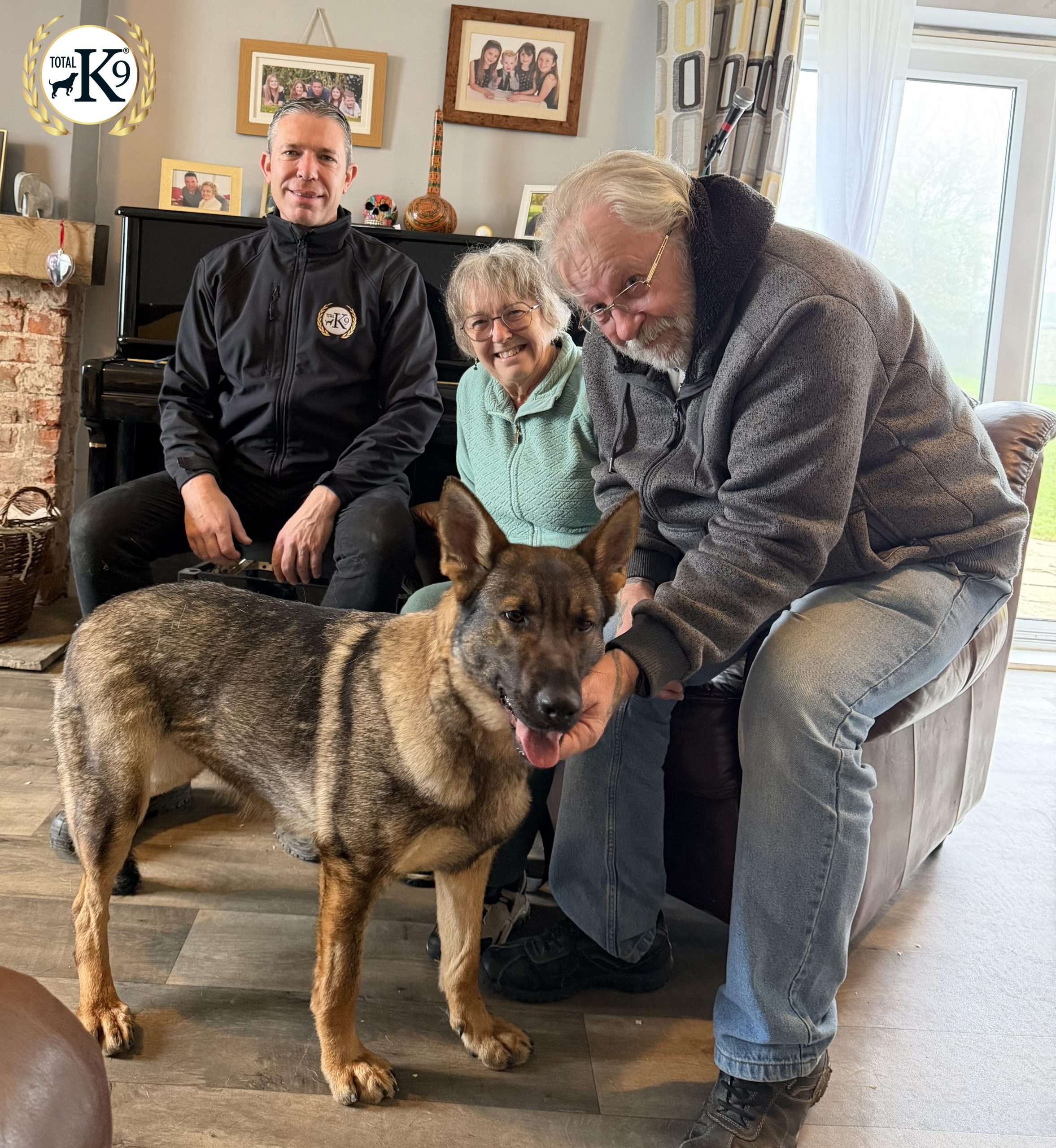
Bringing a new protection dog into your home is exciting for everyone involved, but one of the first things you’ll need to focus on is building trust. Even a highly trained dog needs time to adjust to a new environment, new people and new routines.
Trust is what allows a protection dog to settle into a new home, understand its role within the family and build a strong bond with its handler. It is also what helps the owner feel confident, relaxed and in control. Without trust, even a well-trained dog can feel uncertain in a new setting.
In this guide, we will explain how to build trust with a new protection dog, what to expect during the settling-in period and how to create the kind of relationship that allows your dog to thrive with support from experts like our team at TOTALK9.
Trust Starts With Realistic Expectations
One of the most important things to remember is that trust is not instant. Even if they are already well socialised the dogs are still entering an unfamiliar environment. New people, new routines, new smells and new boundaries can all take time to process.
It can be all too easy for owners to assume that because the dog is trained, it will slot into home life immediately. In reality, training gives the dog a strong foundation, but trust still has to be built in the new relationship. The dog needs to learn how you communicate, what you expect, how your household works and whether you are consistent.
Do Not Rush the Bond
Some dogs settle into a new home very quickly, while others need longer to fully relax. Neither is necessarily a sign of a problem. The key is to give the dog structure without pressure and guidance without overwhelming it.
Rather than trying to force affection or rush the bond, focus on creating an environment where the dog feels safe and understood. Trust grows when the dog learns that you are steady, predictable and fair. Over time, that trust will allow you to build a harmonious home life that includes your protection dog.
Helping Your Dog Settle Into the Home
The first few days and weeks should be focused on settling in rather than testing the dog in every possible scenario. A common mistake is trying to do too much too soon. Owners may want to introduce lots of visitors, take the dog everywhere or immediately expose it to busy and demanding situations.
A more measured approach is usually better. Give the dog time to become familiar with the home, the family and the basic rhythm of daily life. Let it learn where to rest, where to eat, where to go outside and how the household sounds and moves throughout the day.
Generally speaking, you can use the 3-3-3 rule to break down and understand progress. It usually takes 3 days for your dog to decompress, 3 weeks to learn your routine and 3 months to feel fully at home and trust you.
Create Familiarity Before Complexity
A quieter period at the start helps reduce stress and gives the dog a chance to build confidence in its new environment. It also allows you to observe the dog properly. You can start to notice how it responds to you, what helps it relax and where it may need a little more guidance.
Settling in should be approached slowly, but thoughtfully. Short walks, calm time together, basic obedience and controlled introductions are all useful at this stage. The aim is to create familiarity and security before adding more complexity.
Use Routine to Create Security
Dogs often feel safer when life is predictable. Routine helps a new protection dog understand what to expect and what is expected of it. This reduces uncertainty and makes trust easier to build.
Try to keep feeding times, walks, rest periods and training sessions reasonably consistent. The exact timetable does not have to be rigid to the minute, but a clear structure helps. The dog starts to learn when activity happens, when calm time happens and when it can simply switch off.
Build Positive Rituals
Routine also creates regular points of connection between dog and owner. A morning walk, a short obedience session before dinner or a calm grooming routine in the evening can all become positive rituals that strengthen the bond.
Over time, these repeated, dependable interactions help the dog see you as a stable presence. That sense of reliability matters greatly with a protection dog. The more your dog feels that you are steady and predictable, the more confidently it can relax around you and respond to you.
Use Training to Build Communication
Dog training, either with a professional or on your own, is one of the best ways to build trust. However, it should not be viewed only as a way to make the dog comply. Good training builds a language between you and your dog. It teaches the dog how to understand you and teaches you how to read the dog in return.
Start with obedience foundations and commands, even if the dog already knows them well. Simple exercises such as sit, down, place, heel and recall help reinforce communication and create shared focus. They also allow the dog to succeed, which is important during the adjustment period.
Keep Sessions Clear and Productive
Keep sessions calm, clear and purposeful. Protection dogs generally do best when training is structured and fair. Avoid long, exhausting sessions that create frustration. Short, positive sessions are often far more effective, especially in the early stages.
Reward matters too. Praise, calm approval, engagement and appropriate rewards all help the dog associate working with you in a positive way. This does not mean constant excitement. Many protection dogs respond very well to composed, clear feedback rather than over-the-top energy.
Training should help the dog feel guided, rather than pressured. A dog that feels it can understand and succeed with you will naturally begin to trust you more deeply.
Get to Know the Dog in Front of You
Even among highly trained dogs, personalities vary enormously. Some dogs are naturally very affectionate and people-focused. Others are more reserved and take longer to warm up. Some are confident in new environments straight away, while others are more thoughtful and observant.
Building trust means getting to know the dog in front of you rather than expecting a fixed idea of how it should behave. Spend time observing how your dog communicates. Look at body language, energy levels, confidence, play style and rest habits. Notice what helps the dog relax and what makes it more alert or uncertain.
Adjust Your Approach Accordingly
This understanding allows you to respond more appropriately. A more sensitive dog may need slower introductions and a gentler pace. A highly driven dog may benefit from more structured outlets and clearer transitions between work and downtime. A very social dog may bond through shared activity, while a more reserved dog may need quiet consistency first.
When owners take the time to understand the dog as an individual, trust grows more naturally. The dog feels seen rather than managed in a generic way.
Keep Household Rules Clear
Protection dogs thrive when the rules are clear. Unclear boundaries often create uncertainty, and uncertainty can damage trust. Your dog should know what is expected within the home, during walks, around guests and in daily interactions.
Decide early what the rules are and stick to them from the start. Some important points to think about here include:
• Is the dog allowed on furniture?
• Where does it sleep?
• How should it greet visitors?
• What does calm behaviour at the door look like?
• How should different family members interact with it?
Fair Boundaries Build Confidence
Once those boundaries are set, keep them consistent. That consistency helps the dog feel secure because it does not have to guess what will happen next. It also reduces conflict. Dogs often become stressed not because rules exist, but because the rules keep changing.
Consistency is particularly important with a protection dog because these dogs are trained to pay attention. If the guidance they receive is stable, they usually settle more confidently. If it is unpredictable, they may become hesitant or testy.
Create Calm Social Experiences
A trustworthy protection dog needs to feel stable in everyday life. That stability is reinforced through calm exposure to the world around it. Once the dog has begun settling in, controlled social experiences can help build trust in both the environment and the handler.
This does not mean forcing the dog to interact with everyone it meets. In fact, neutrality is often more valuable than sociability. The goal is for the dog to move through daily life in a calm, balanced way, looking to the handler for guidance rather than reacting impulsively.
Introduce New Environments Gradually
Take the dog on structured walks. Introduce new places gradually. Allow it to observe without pressure. Reward calm behaviour and engagement with you. Show the dog that new situations are manageable and that you will guide it through them.
A dog that trusts its handler in the outside world often develops a stronger bond at home as well. Shared experiences build confidence on both sides.
Avoid Confusing or Harsh Corrections
Correction has a place in dog training when used appropriately, but trust can be damaged very quickly by punishment that is unfair, emotional or poorly timed. A dog that does not understand why it is being corrected may become uncertain or withdrawn.
This is particularly important in the early stage of the relationship. Your new dog is still learning your communication style. If you respond harshly out of frustration, you risk making yourself unpredictable in the dog’s eyes.
Aim for Clarity Over Force
Instead, aim for clarity. Redirect unwanted behaviour and reinforce desired behaviour. Use professional guidance if needed. When correction is necessary, it should be calm, proportionate and understandable to the dog.
Protection dogs should feel guided by their handlers, not intimidated by them. Trust depends on the dog believing that your direction is fair and consistent.
Know When to Ask for Support
Building trust with a new protection dog does not mean you have to figure everything out alone. In fact, responsible ownership often involves staying in touch with the trainer or provider, asking questions and seeking guidance when needed.
If the dog seems persistently unsettled, struggles with specific transitions or shows behaviours you are unsure about, early support can make a major difference. Small issues are often easier to resolve before they become bigger patterns.
Ongoing Guidance Can Protect the Bond
Good providers, like our team at TOTALK9 ® understand that placement is only part of the process. Ongoing handler support, refresher training and practical advice can all help protect the bond you are building.
Seeking help is not a sign that you are failing. It is often a sign that you are taking the role seriously and looking for the best path forward.
Trust in Your Protection Dog is Built Day by Day
Welcoming a new protection dog into your life is the beginning of an important relationship. The training may already be there, but trust is what turns training into partnership. It is what helps the dog feel safe in your home, connected to your guidance and confident in its new role.
The best approach is usually the simplest one: be calm, be clear, be consistent and give the relationship time to grow. Focus on structure, communication and everyday reliability. Respect the dog as an individual, and do not underestimate the value of routine and quiet bonding.
If you have any questions about training for your dog, or are interested in getting your own protection dog, please get in touch with our team at TOTALK9 today.